
Nearsighted or farsighted? Enjoy lenses with long-lasting comfort.

Overview
Exceptionally Breathable and Water Loving!
Our exclusive Aquaform® Comfort Science™ ensures that your eyes get plenty of oxygen so they stay healthy, while delivering a lens that’s soft, flexible, smooth, and comfortable.
The Aquaform lens material is also naturally wettable—with no artificial coatings or wetting agents—and locks water into the lens to help keep it moist, even after extended wear.
Monthly Lenses With PEG
What’s PEG? It’s short for Polyethylene Glycol. More importantly, PEG extends Avaira’s water-loving qualities by tightly binding water throughout the lens, resulting in continuous comfort throughout your day and the life of the lens.
Ask your eye care professional about the long-lasting comfort of Avaira contacts (pronounced “ah-VAIR-ah”).
Aquaform® Technology
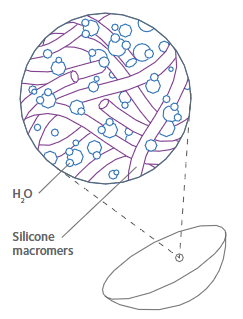
You’ve probably seen the term Aquaform® Technology on our products and wondered what it really means. It’s not just one thing, but a combination of material technologies that work together to create a comfortable, high-performance lens available only through CooperVision.
The Aquaform® lens material has several features that come together to support an optimal lens-wearing experience.
For example, when a lens doesn’t breathe properly, the tiny red veins in the white of the eye can become more visible as they reach for oxygen—much like a plant stretching toward sunlight. Aquaform® Technology lenses offer high oxygen transmissibility, improving breathability to help keep eyes healthy and white.
Another key feature is a low modulus. Modulus refers to how flexible a contact lens is—the lower the modulus, the softer and more flexible the lens feels on the eye.
The molecular structure of Aquaform® Technology also provides natural, uniform wettability, creating a smooth lens surface without artificial coatings or wetting agents that can wear off over time. Silicone macromers lock water into the lens, helping it stay moist even after extended wear.
Lens shape also plays an important role in comfort. Aquaform® Technology lenses feature an optimized rounded-edge design that reduces interaction with the conjunctiva, meaning less rubbing against the inside of the eyelid and a more comfortable wearing experience.
PEG
Polyethylene Glycol (PEG)
If you’re one of our Avaira customers, you may have heard of Polyethylene Glycol, or PEG for short. PEG is a highly effective lubricating agent that tightly binds water throughout the lens, helping provide continuous comfort until the end of the day and throughout the life of the lens.
Avaira lenses are the only two-week contact lenses with PEG built in both on the surface and throughout the interior of the lens, helping them stay moist and comfortable for longer.
Product details
| Corrects | Nearsightedness and farsightedness: In nearsightedness, close objects are seen clearly, but objects farther away appear blurred; in farsightedness, distant objects are usually seen clearly, but close ones do not come into proper focus. |
| Replacement Schedule | Monthly. Lenses are to be discarded and replaced with a new lens every month. |
| UV Protection | Yes, these lenses provide UV protection. While beneficial, UV-absorbing contact lenses are not substitutes for protective UV-absorbing eyewear, such as UV-absorbing goggles or sunglasses, as they do not completely cover the eye and surrounding area. You should continue to use UV-absorbing eyewear as directed by your eye care practitioner. |
| Wettability | Aquaform® Comfort Science™, which provides natural wettabillity by binding water to the lens, without the need for additional surface treatments or wetting agents. |
| Lenses Per Box | 6 |
* Warning: UV-absorbing contact lenses are not substitutes for protective UV-absorbing eyewear, such as UV-absorbing goggles or sunglasses, because they do not completely cover the eye and surrounding area. Patients should continue to use UV-absorbing eyewear as directed.