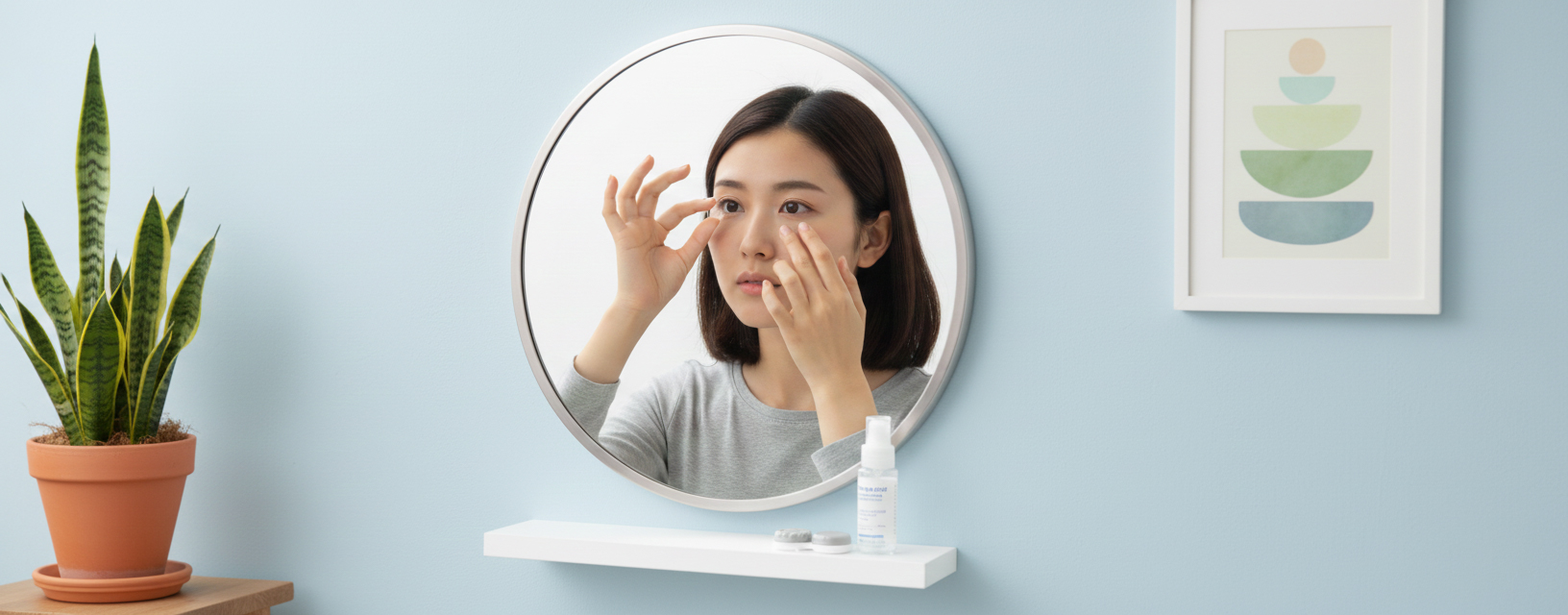
Contact Lenses: Safety & Hygiene
A contact lens is a regulated medical device. When cared for correctly, they provide safe, comfortable, and convenient vision correction. However, untreated infections caused by poor hygiene can result in permanent vision loss.
The Eight Golden Rules of Lens Wear

Strict Hygiene Practices
- - Never expose lenses or cases to tap water.
- - Wash and thoroughly dry hands before handling.
- - Never “top off” old solution — always use fresh liquid.
- - Rub and rinse the case, then dry it upside down.
Healthy Wearing Habits
- - Avoid sleeping in lenses unless prescribed.
- - Wear spectacles regularly to give your eyes a break.
- - Follow the specific cleaning system for your lens material.
- - Visit your practitioner at least once a year.
Act Immediately: Remove lenses and seek care if you experience pain, light sensitivity, sudden blurred vision, or excessive discharge.
Risks and Regulation
CDC data shows that while 41 million Americans wear lenses, 98% of wearers report at least one risky hygiene behavior.
Reported Complications (FDA Data)
Of reported adverse events, nearly 20% involved corneal scarring or the need for transplants. Major risk factors included:
- - Sleeping in lenses not designed for extended wear.
- - Using expired lenses or solutions.
- - Swimming or showering with lenses in.
Spectacle Wear: Why It Still Matters
Many wearers neglect their spectacle prescription, leading to contact lens overwear. This reduces oxygen delivery to the cornea and increases the risk of serious complications.
— Russell Meyer-Wilson, Optometrist
Key Takeaway
By following professional guidance, maintaining strict hygiene, and balancing lens wear with spectacles, the risk of complications is dramatically reduced. Safe wear is a partnership between you and your eye care professional.
Clinical References
1. Cope, J.R. et al. (2016) ‘Contact lens–related corneal infections —
United States, 2005–2015’, MMWR, 65(32).
2. CDC (n.d.) Healthy Contact Lens Wear and Care. Available
at: https://www.cdc.gov/contactlenses
3. Cleveland Clinic (2015)
8 Smart Hygiene Habits for Contact Lens Wearers.
4. Pharmacy Times (2016) Contact Lens Hygiene Is Lacking.